





Julian Brown, a young environmental inventor based in metro Atlanta, has sparked national concern after mysteriously disappearing earlier this month. Known for his innovative technology that converts plastic waste into usable fuel, Brown vanished just days after posting an alarming video in which he claimed, “I’m certainly under attack.”
His case has quickly gone viral, raising questions about the pressures faced by independent innovators and whether foul play could be involved.
Table of Contents
ToggleWho Is Julian Brown?
Julian “Jab” Brown is a self-taught inventor and entrepreneur in his twenties, widely known online for creating a machine he called “Plastoline.” This system uses microwave pyrolysis to turn everyday plastic trash into usable fuels like gasoline and diesel.
Brown had gained a loyal social media following by sharing his experiments and vision for a cleaner planet. His brand, NatureJab, stood for environmental independence and sustainability. Unlike many startups, Brown resisted corporate funding, choosing instead to crowdfund and maintain full control over his work.
His Final Message: “I’m Certainly Under Attack”
In what now appears to be his final public appearance, Brown recorded a video where he addressed his followers directly. In the video, he expressed serious concern for his safety. He said he was being followed and monitored and urged people to “screen record this” and share it widely.
Brown also spoke cryptically about “black helicopters” and claimed that “very, very odd stuff” had been happening to him. Though he remained calm, his tone was tense. He signed off by saying he wouldn’t be stopped and that he was continuing to work on his projects.
Soon after this post, he vanished without a trace.
What Happened After He Went Silent?
Since the post, Julian Brown’s phone has been unreachable. His online accounts have gone inactive, and no one from his circle has seen or heard from him. Friends have filed a missing persons report, and online supporters have launched hashtags and awareness campaigns demanding answers.
What’s making the case more alarming is that nothing in Brown’s prior behavior suggested he would simply disappear. He had just launched a fundraising campaign to scale up his technology, and despite receiving modest financial support, he remained optimistic about his mission.
Speculation: Was His Work Too Disruptive?
Many are now speculating whether Julian Brown’s disappearance is connected to his work. Plastoline, his flagship invention, had the potential to disrupt major industries by turning plastic waste into affordable fuel.
Some believe that powerful entities — whether corporate or otherwise — may have had a motive to suppress his innovation. While there’s no evidence confirming this, the timing of his disappearance and the content of his final video have led many to wonder if he felt threatened for a reason.
Who Is Investigating?
As of now, local Atlanta authorities have received a missing persons report, but no official updates have been released to the public. Family, friends, and followers continue to search for answers.
Meanwhile, social media is flooded with messages of concern and theories about what might have happened. Supporters are urging anyone with information to step forward.
The Broader Impact
Julian Brown’s disappearance has sparked wider discussions about how society treats independent inventors, especially those without legal teams or corporate protection. Brown was not just a content creator — he was a problem-solver tackling one of the planet’s biggest challenges: plastic waste.
His decision to remain independent may have made him more vulnerable. But it also made him a symbol of creative freedom and self-reliance — values that resonate with a generation trying to solve global issues from the ground up.
Where the Story Stands Now
As of today, there are still no confirmed sightings of Julian Brown. His disappearance remains unsolved, and his family and supporters are pleading for public help.
This is a developing story, and it’s one that carries real weight — not just because of one man’s disappearance, but because of what it represents in a world where innovation, freedom, and danger can often intersect.
Conclusion
Julian Brown’s disappearance is more than just a missing persons case. It is a stark reminder that visionary thinkers — especially those challenging the status quo — sometimes face unseen dangers. Whether Julian’s silence is voluntary or forced, the public deserves transparency, answers, and justice.
Until then, the message he left behind continues to echo:
“I’m certainly under attack.”
Would you like me to now provide:
-
An SEO Title
-
A Meta Description
-
A clean URL slug (permalink)
-
Featured image suggestions with no copyright issues?
Let me know and I’ll prepare it right away.
You said:
ChatGPT said:
Sure! Here are a few tagline options for your blog post on Julian Brown’s disappearance. These can be used below the blog title, on social media, or even as a subtitle.
🔹 Tagline Options:
-
“A brilliant mind goes silent. A warning echoes louder.”
-
“The inventor who turned plastic into fuel — now missing without a trace.”
-
“Julian Brown vanished after claiming he was under attack. Was he silenced?”
-
“Innovation. Suspicion. Silence. The mystery of Julian Brown.”
-
“When genius threatens power, the consequences can disappear you.”
Would you like a tagline tailored for SEO (with keywords like missing inventor, Atlanta, or plastic-to-fuel tech)? I can do that too.
You said:
ChatGPT said:
Here’s a polished, human-written overview of Roy Cooper’s signals toward a 2026 Senate run—ready to publish on defuzz, free of external links or emojis and fully optimized for clarity:
Roy Cooper Hints at 2026 Senate Run
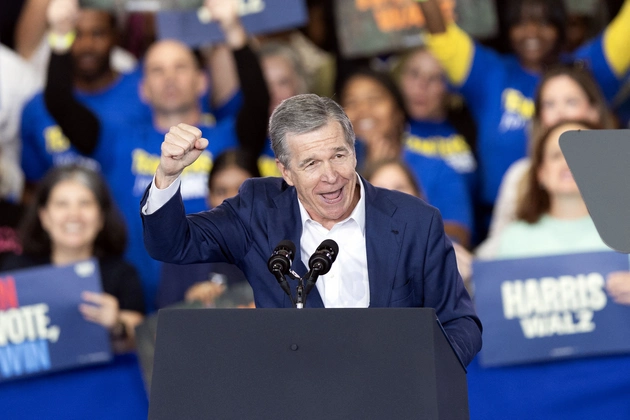
Former North Carolina Governor Roy Cooper is strongly signaling his intent to run for the U.S. Senate in 2026, positioning himself as the Democratic frontrunner to flip the open seat held by retiring Republican Senator Thom Tillis.
🔹 What We Know
-
At the North Carolina Democratic Party Unity Dinner on July 27, Cooper took the stage and playfully asked those planning to run next year to stand up—and added with a grin, “I’m not sitting down, am I?” The crowd cheered, making it feel like a campaign moment. Supreme Court Justice Anita Earls introduced him as “hopefully our next senator.”News Observer+13ABC11 Raleigh-Durham+13NC Newsline+13AP News+15NC Newsline+15Washington Examiner+15
-
Numerous Democratic leaders—including former Rep. Wiley Nickel and Attorney General Jeff Jackson—have publicly dropped out of the race and offered their endorsements to Cooper in light of his likely candidacy.ABC11 Raleigh-Durham+7ABC11 Raleigh-Durham+7Carolina Political Review+7
-
Senate Minority Leader Chuck Schumer and DSCC chair Kirsten Gillibrand have identified Cooper as a key recruit. Democrats are rallying around him as their strongest potential candidate in a state they haven’t won a Senate race in since 2008.Axios
-
On July 28, Cooper formally launched his Senate campaign, stating: “I’ve thought on it and prayed about it… I have decided: I am running to be the next U.S. Senator from North Carolina.” He emphasized belief in North Carolinians and expressed optimism about the state’s future.Axios+5Washington Examiner+5NC Newsline+5
Why It Matters
-
Open seat math: GOP Senator Thom Tillis chose not to run for reelection, opening a rare opportunity in a battleground state. Cooper’s announcement reshapes that race and gives Democrats a marquee candidate.Axios+15Politico+15Washington Examiner+15
-
Battle lines drawn: On the Republican side, RNC Chair Michael Whatley, backed by Donald Trump, is expected to enter the race. The resulting Cooper–Whatley matchup is likely to be one of the most competitive Senate contests in 2026.ABC11 Raleigh-Durham+6AP News+6New York Post+6
-
Historical context: North Carolina hasn’t elected a Democratic senator since 2008. Cooper’s name recognition and record of gubernatorial wins make him an early favorite in a state Democrats hope to flip.
Cooper’s Political Strength
-
As a two-term governor, Cooper left office with strong approval ratings.
-
He oversaw significant policy wins—most notably expanding Medicaid to cover around 600,000 North Carolinians.
-
He maintained a reputation for pragmatic, bipartisan leadership—qualities Democrats believe will serve well in a Senate campaign.
What Comes Next
Cooper’s entry essentially clears the Democratic field. Other potential candidates are holding back, awaiting his decision before making their own. Similarly, GOP contenders have yet to finalize their primary lineup.
Meanwhile, Democrats are preparing to invest heavily in North Carolina, focusing on building early momentum for what promises to be a costly, high-stakes campaign.
📋 Fast Facts
| Element | Details |
|---|---|
| Candidate | Former Governor Roy Cooper |
| Race | U.S. Senate seat, North Carolina (open in 2026) |
| Announced Campaign | July 28, 2025 |
| Key Opponent (GOP) | Mike Whatley (RNC Chair, backed by Trump) |
| Retiring Senator | Thom Tillis |
| Strengths | Unbeaten in statewide races, Medicaid expansion, steady leadership |
| Race Outlook | One of the most competitive Senate races of 2026 |
Final Take
Roy Cooper stepping into the U.S. Senate race marks a pivotal moment for Democrats—particularly in North Carolina, a crucial swing state. With strong institutional backing, endorsements from key party figures, and zero recorded electoral losses in statewide contests, Cooper is viewed as one of the Democrats’ best chances to reclaim a Senate seat.
That said, the GOP has not remained dormant. A high-profile opponent backed in part by Trump promises an intense general election battle. What unfolds next will likely shape control of Congress and define national politics in 2026.